BEYOND THE STICKER CHART: WHY I SWITCHED TO CLASSROOM DOLLARS FOR CLASSROOM REWARDS
WHY CLASSROOM DOLLARS?
If you’ve spent more than five minutes in a Pre-K classroom, you know that the energy is high, the curiosity is endless, and the "sticker chart" fatigue is very real. My assistant teacher had tried a few different classroom management methods and found that we wanted our efforts to focus on life skills like patience, the value of hard work, and the exciting concept of saving up for something special. That’s where Classroom Dollars came in.
What started as a simple experiment in my classroom quickly became the heartbeat of our daily routine. Unlike a traditional reward system, these dollars gave my students a tangible way to see their progress and understand that their choices, like showing extra effort or being a great listener, had real value. It wasn't just about "being good.” It was about building a classroom economy where every student felt empowered to earn, save, and celebrate their growth.
HOW I USED CLASSROOM DOLLARS
Classroom dollars were more than just a reward. They were a hands on way to introduce the concept of saving. While each dollar didn’t have a specific numerical value, students learned to collect and save their earnings to reach for bigger rewards.
Our Daily Routine
At the end of each day during our daily closing meeting, we would hand out the classroom dollars for the day. As we passed them out, we made sure to explain exactly why the student earned those specific dollars. If a student earned a listening dollar, we would celebrate and share a specific example of how the student practiced good listening for the day. We aimed to ensure every student earned at least one dollar daily, though some could earn up to 4–5 depending on their day. At the end of the day, students would pack up for home and tuck their earned dollars into personal envelopes kept in their cubbies.
Cashing In For Rewards
Each reward was worth a specific amount of classroom dollars, and students could use any combination of the dollars they earned to "buy" them. The fewer spots that were available each week for a specific reward dictated how much the reward would “cost.” Here are a few examples of our most popular rewards in our classroom:
1-on-1 lunch with the teacher (6 dollars): this was the most popular reward option! Since our school didn’t have a cafeteria, students ate lunch in the classroom with us as teacher monitoring them. This reward gave students individual time with one of the two teachers in our classroom loft.
Rest time in the loft (4 dollars): this was our second most popular option. Students loved earning a special "VIP" spot for relaxation. After lunch time, students would transition to rest time. Each day, we allowed two students to set up rest time in the loft area of our classroom.
Pick your friend for lunch (2dollars): since we had assigned seating on our classroom. students who selected this could choose a specific buddy to sit with during meal time. This reward was unlimited as students could pair up everyday if they chose to do this.
Teacher helper for the day (3 dollars): students who selected this reward would take on special classroom responsibilities like helping the teacher pass out assignments or help deliver mail to the front office.
The Weekly Selection
Once a week (typically on Mondays), students were selected at random to come up and pick their reward for the week. Each week we rotated the order in which students could cash out on their dollars for rewards to ensure that each student had a chance to pick their top reward choice for the week. Because certain rewards were limited, such as only 5 slots for 1-on-1 lunches or 10 spots for rest time in the loft per week, we would only allow students to pick specific rewards once every 2-3 weeks so that everyone had a fair chance. Students could also opt to save their dollars for the week.
Each week, we would jot down on a list each students reward option and plan out the rewards for the week. If we had 5 students select 1-on-1 lunch with a teacher, we would assign them to a specific day for the week, taking into account any days we knew students would be absent for the week. If a student was absent on the day selected for their reward, we would reschedule them to ensure they had a chance to celebrate their reward.
The Heart of the System: 1-on-1 Lunch with the Teacher
I started this classroom management system in 2020, during the height of COVID. At a time when connections were so hard to maintain, this became a lifeline for our classroom community. Each week, my assistant teacher and I would rotate who would have 1-on-1 time with the students while the other oversaw the rest of the class for lunch. Often, we would have lunch and do a special activity of the student's choice.
Jenga was the absolute favorite! Getting to play Jenga with the teacher was a highlight for students each week, especially when they managed to beat us! Other popular activities included drawing, coloring, and play-doh time. These moments allowed us to have 1-on-1 conversations that are so rare in the busy Pre-K environment, making each student feel truly seen and special.
Implementing Classroom Dollars Rewards System Are Easier Than You Think
For those of you that feel like this is too much for you to implement in your classroom, I can assure you that keeping track of the classroom rewards were a lot easier than you think. That’s because we chose rewards that were the least amount of burden on us as teachers while also being favorites of our students.
As I mentioned before, students already ate lunch in the classroom so overseeing lunch was something we already did in the daily rhythm of our classroom. While having 1-on-1 lunch with a student, we would have a chance to eat our lunch with them, killing two birds with one stone. Utilizing helpers in the classroom is always a great way to take the burden off of you as the teacher to do everything. Allowing the students to sit in a different spot for lunch next to their best friend was something they looked forward to, especially because we aimed to separate friends with assigned seating to allow them to focus better during the day.
Tailoring The System To Your Students
The best part of this classroom management system is that the rewards are truly endless. You can tailor the rewards to your students' specific interests and, just as importantly, to your own capacity as a teacher. If you have a group that loves extra recess, make that a high-tier reward! If you need a low-prep reward, focus on rewards like "shoes off in the classroom" or "wear a hat to school." This system is designed to grow and change alongside your class.
WHAT’S INCLUDED IN THE FREEBIE
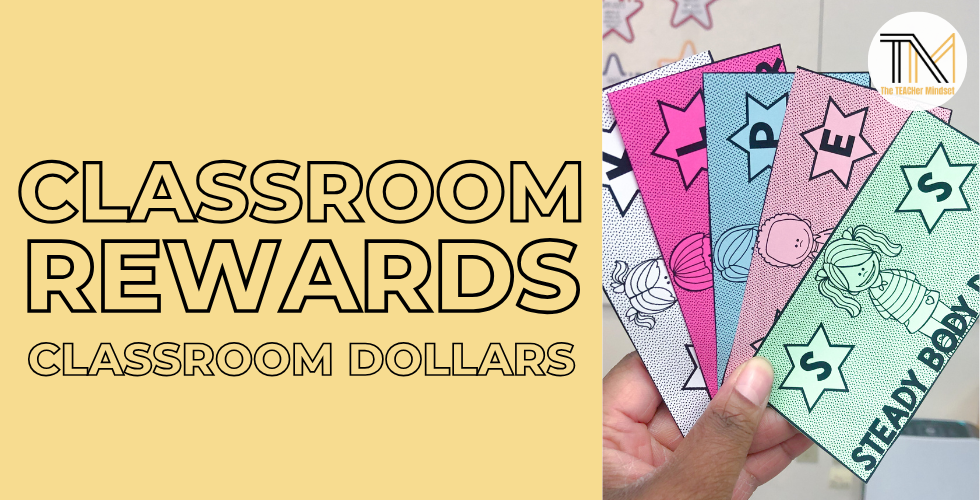
The best part about this resource is its flexibility. It can be adapted for any classroom or grade level. When you download this freebie, you will receive four distinct types of classroom currency to help you target the following positive behaviors:
Effort Dollars: to celebrate students who are working hard and trying their best.
Participation Dollars: to encourage students to engage during circle time and group activities.
Steady Body Dollars: to reinforce safe, calm, and controlled movements.
Listening Dollars: to reward those who are following directions and showing great listening skills.
If these four don’t meet your needs, it’s pretty easy to create your own.
PRO-TIP: COLOR CODING
To make these even more effective and organized, I recommend printing each type of dollar on a different color of cardstock or paper. Not only does this make them look fun and vibrant, but it also helps both you and your students quickly differentiate between the different dollars at a glance. For example, you might choose:
Green for Effort
Yellow for Participation
Blue for Steady Bodies
Pink for Listening
I hope that you and your students love this resource just as much as my students did. If you want to try out this resource for free, use the link below to grab your copy today!